
From Our Vaults
The Records That Survived
Not many companies can trace their founding to a specific date and place. Swasti can. The Board of Directors minutes book, the bank-certified export statements, the founding membership register of the Mangalore Cashew Manufacturers' Association — all survive in the family's keeping, as primary sources of a history worth preserving.
The photographs presented here are drawn from the Swasti Cashew Industries private collection. They document the factory, the founders, and the working life of an enterprise that shipped to twenty countries and employed thousands of families. We share them as a record of what was built here, and as a foundation for what continues.
“The archive presented here is the foundation of the Swasti Heritage — a record of one family's contribution to an industry, a city, and a crop that shaped coastal Karnataka. More to come.”
Gallery I
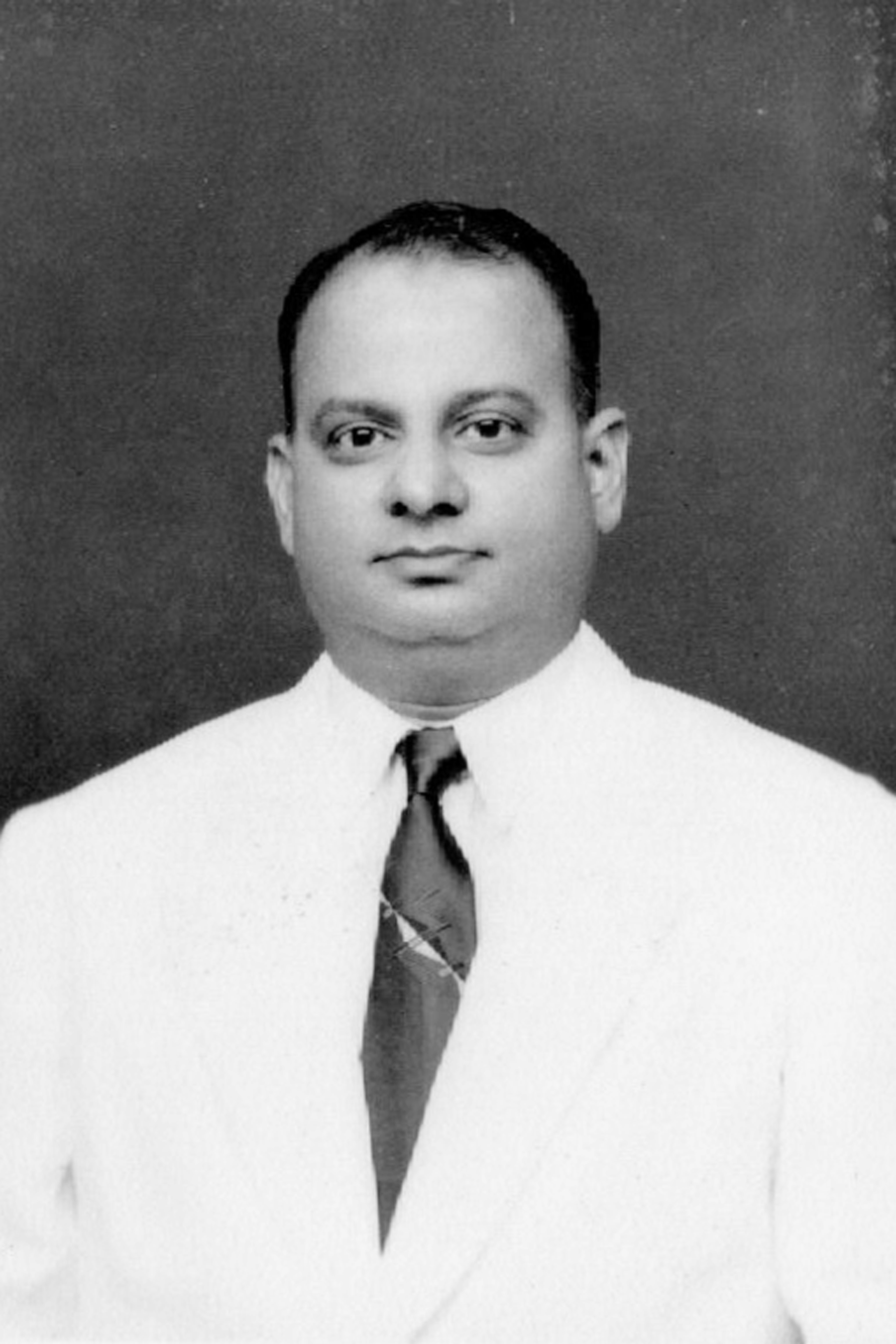
Shri Sujir Damodar Nayak, Managing Director and co-founder, Swasti Cashew Industries Private Limited. Studio portrait, c.1950s.
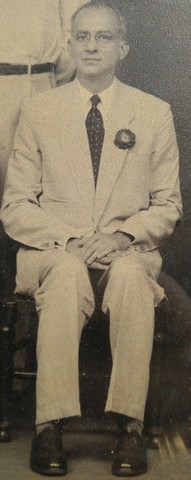
Shri Sujir Pundalik Nayak, Chairman and co-founder, Swasti Cashew Industries Private Limited. c.1950s.
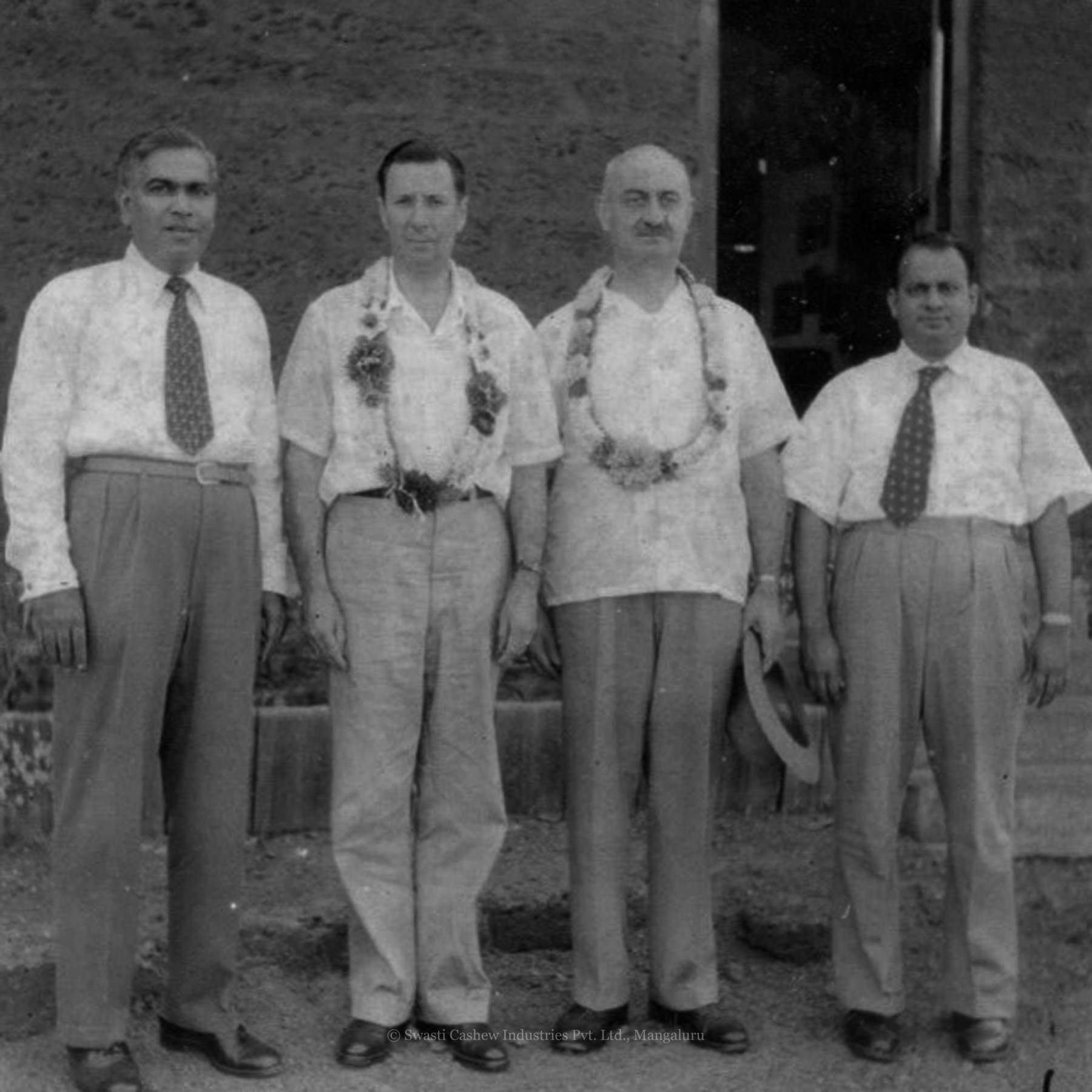
Shri H. Ratnakar Kamath (left) and Shri Sujir Damodar Nayak (right) with visiting foreign buyers at the Swasti factory, Mangaluru, c.1952–57.
Gallery II
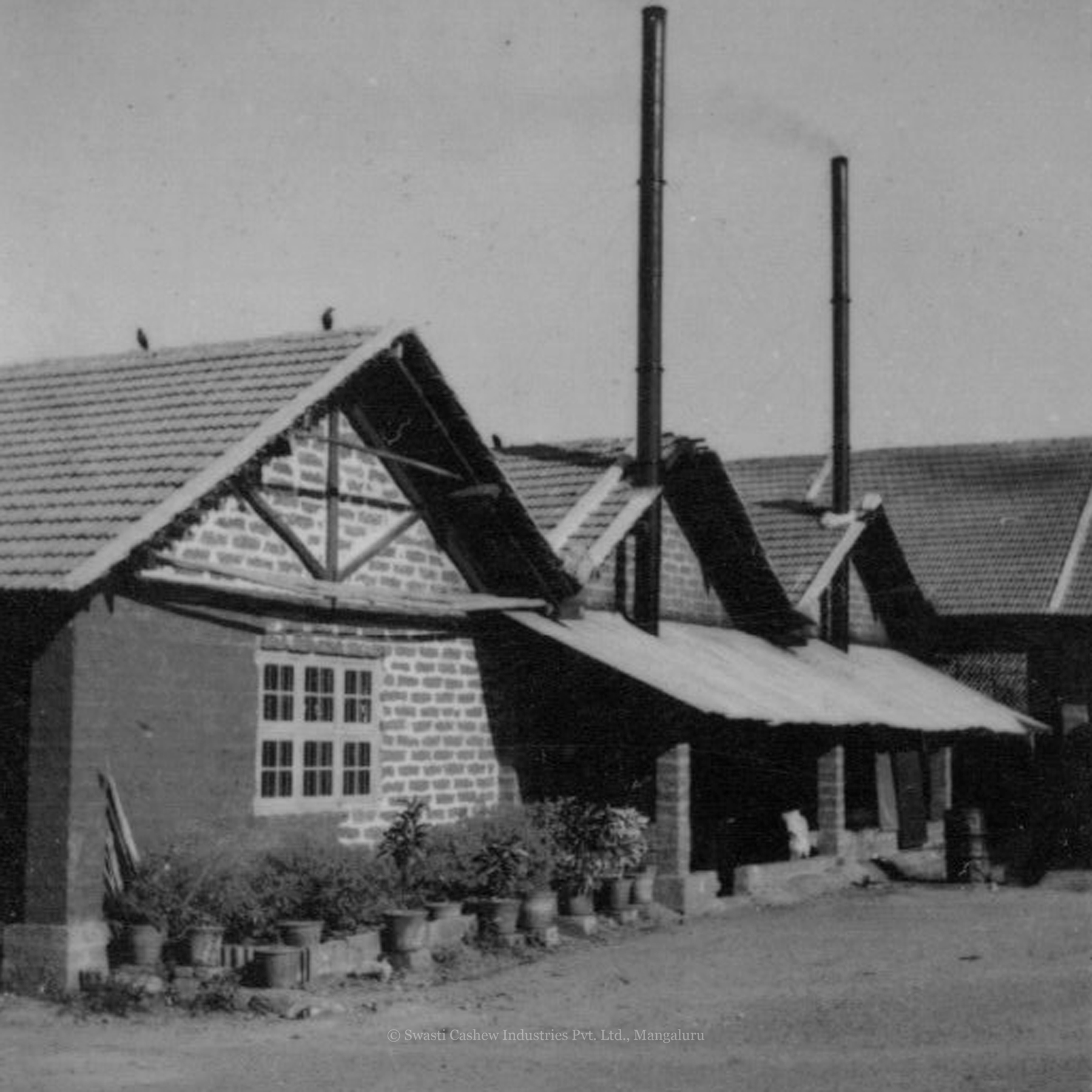
The Swasti factory, Mangaluru. Three chimneys mark the boiler and roasting plant. At its peak the factory employed 3,500 workers. c.1955.
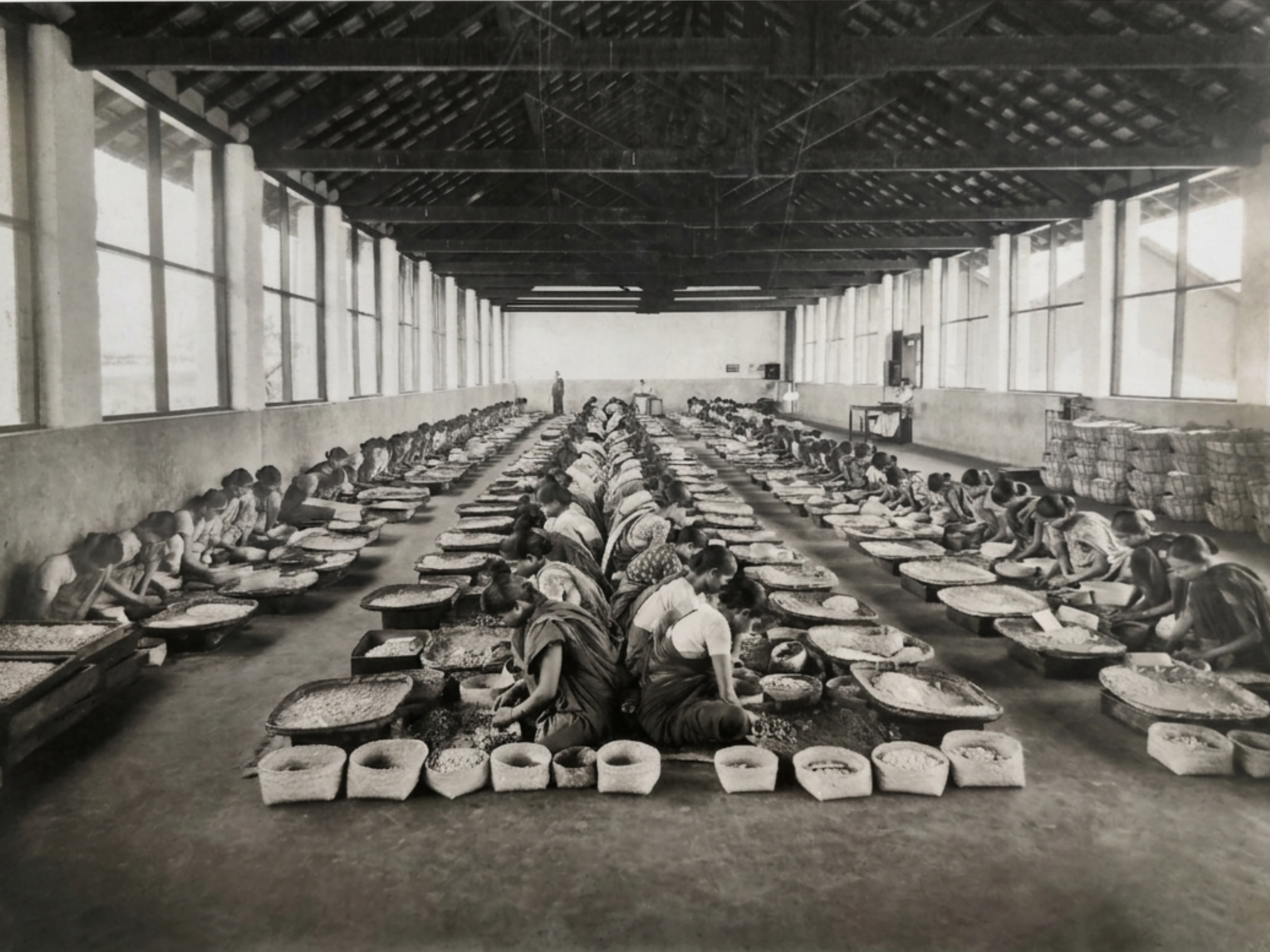
The grading hall, Swasti Cashew Industries, Mangaluru. Hundreds of women workers sort and grade kernels by hand. New York buyers paid a premium for certain Swasti grades. c.1955.
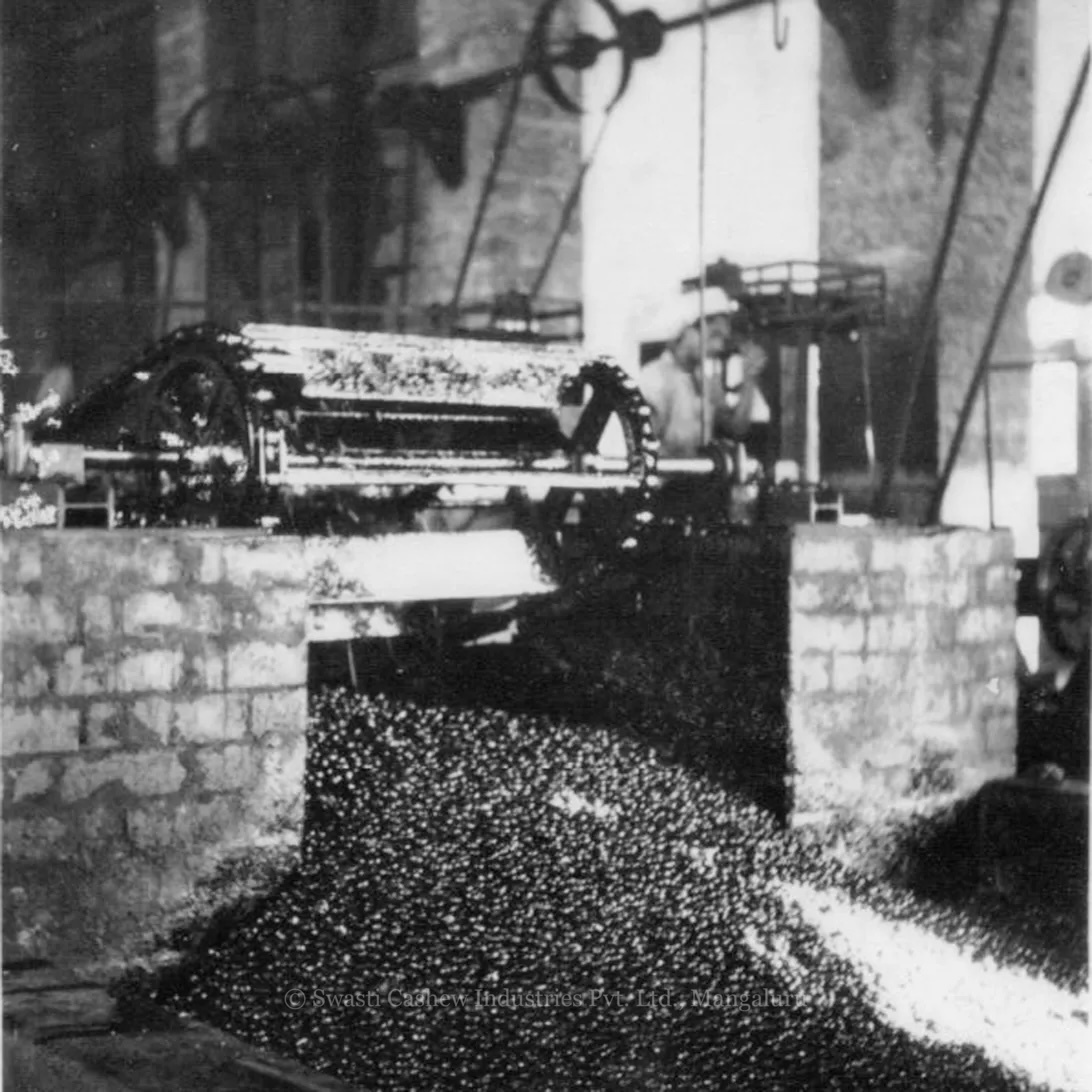
Cashewnuts emerging from the oil bath roaster — dark-shelled, CNSL-coated, ready for shelling.
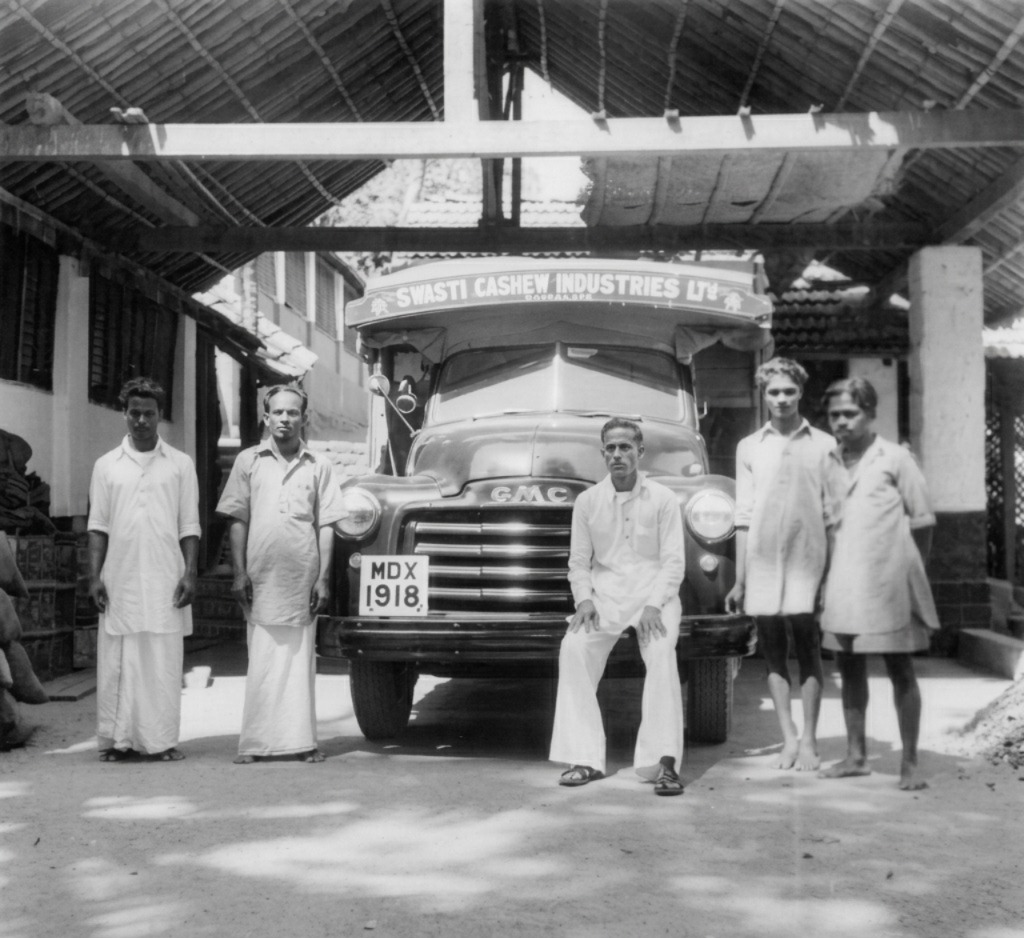
The Swasti GMC truck, Registration MDX 1918. 'Swasti Cashew Industries Ltd' above the cab. Transport between the Konchady factory and the Bunder docks. c.1955.
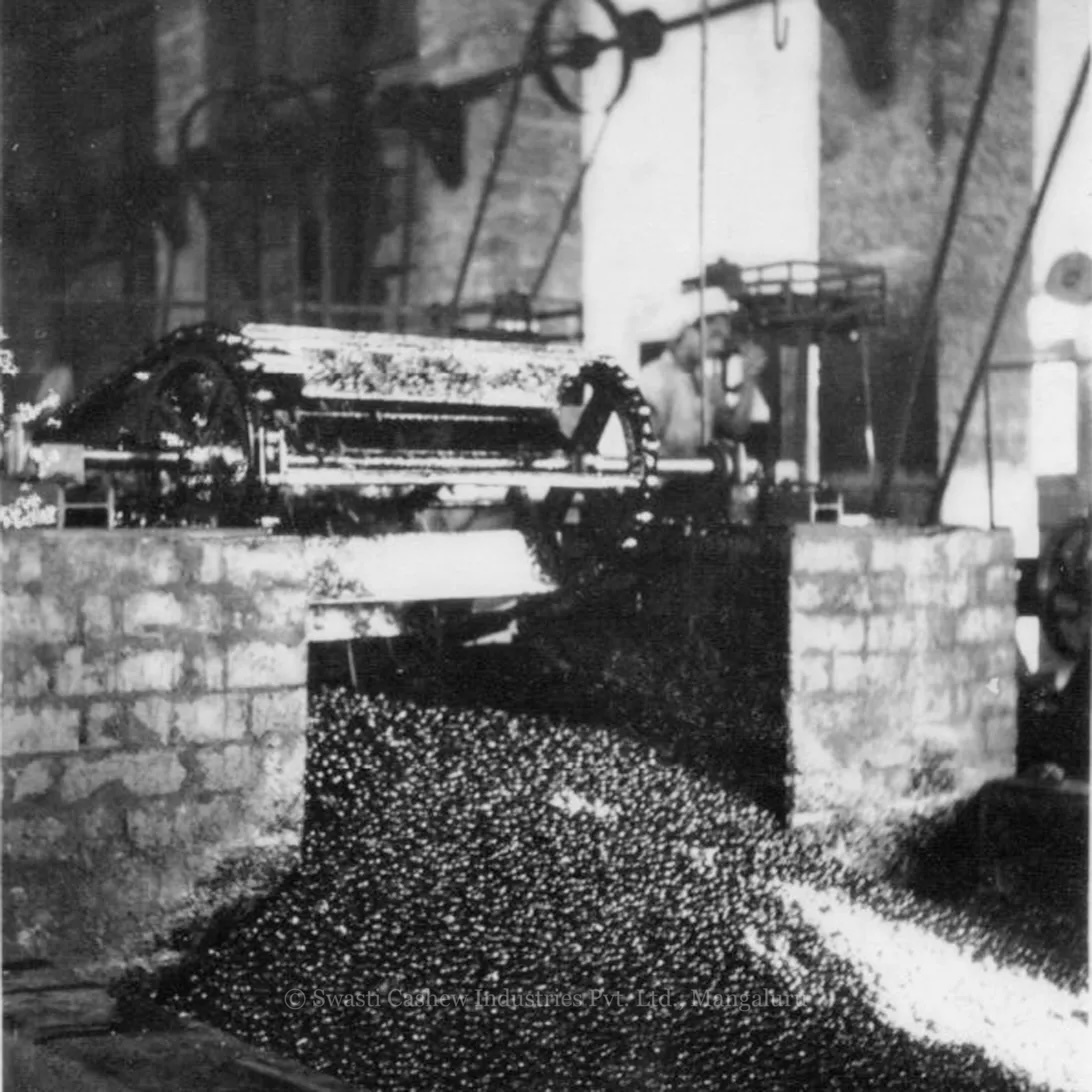
The oil bath roasting plant — the machinery that extracted CNSL while roasting the cashewnuts uniformly. Swasti factory, Konchady, c.1952.
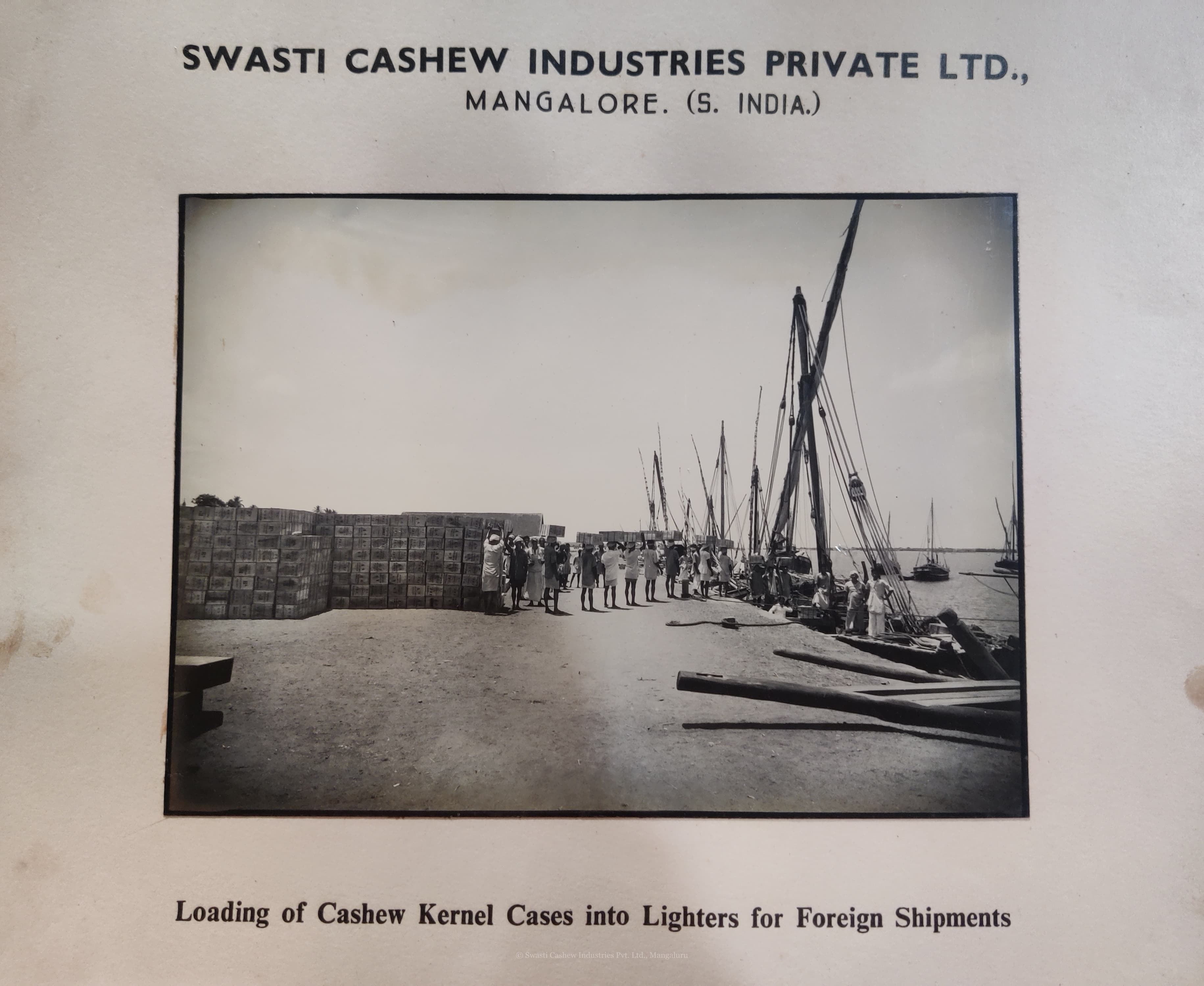
Loading shipments on the Mangaluru waterfront, c.1953–55. Sailing vessels and cargo boats in the background — the maritime world that carried Swasti's exports to New York, London and beyond.
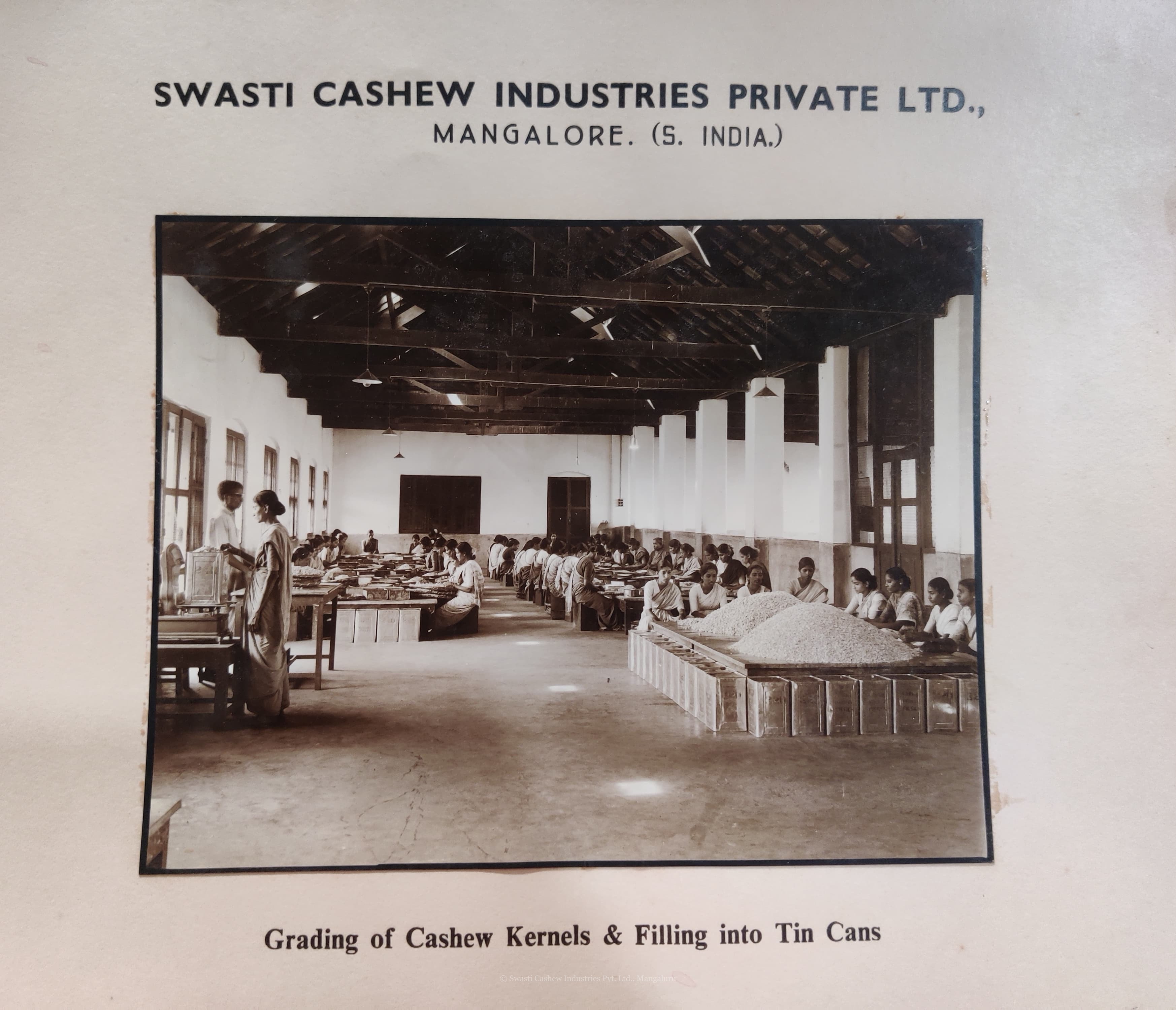
Grading process at Swasti Cashew Industries.
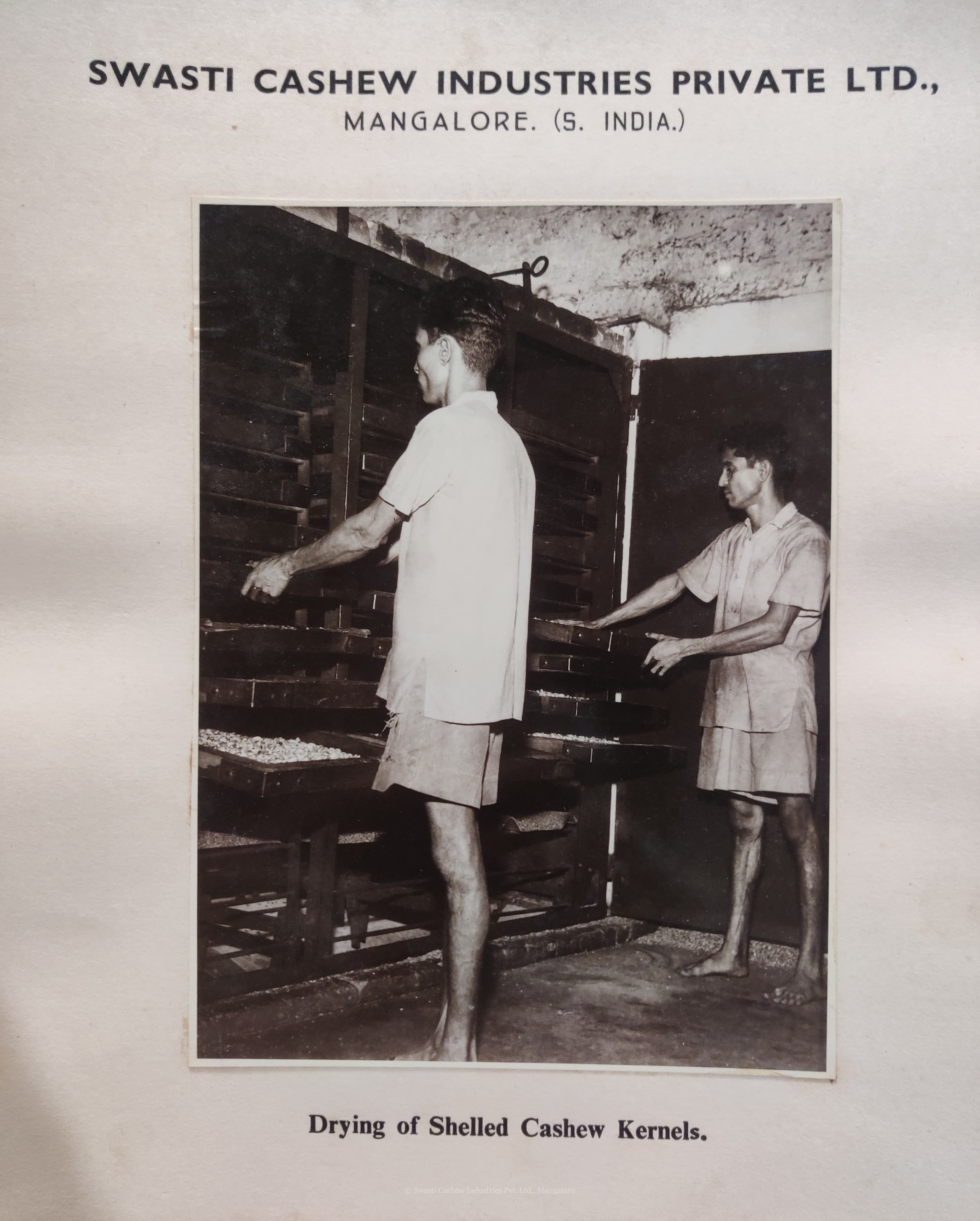
Drying process at Swasti Cashew Industries.
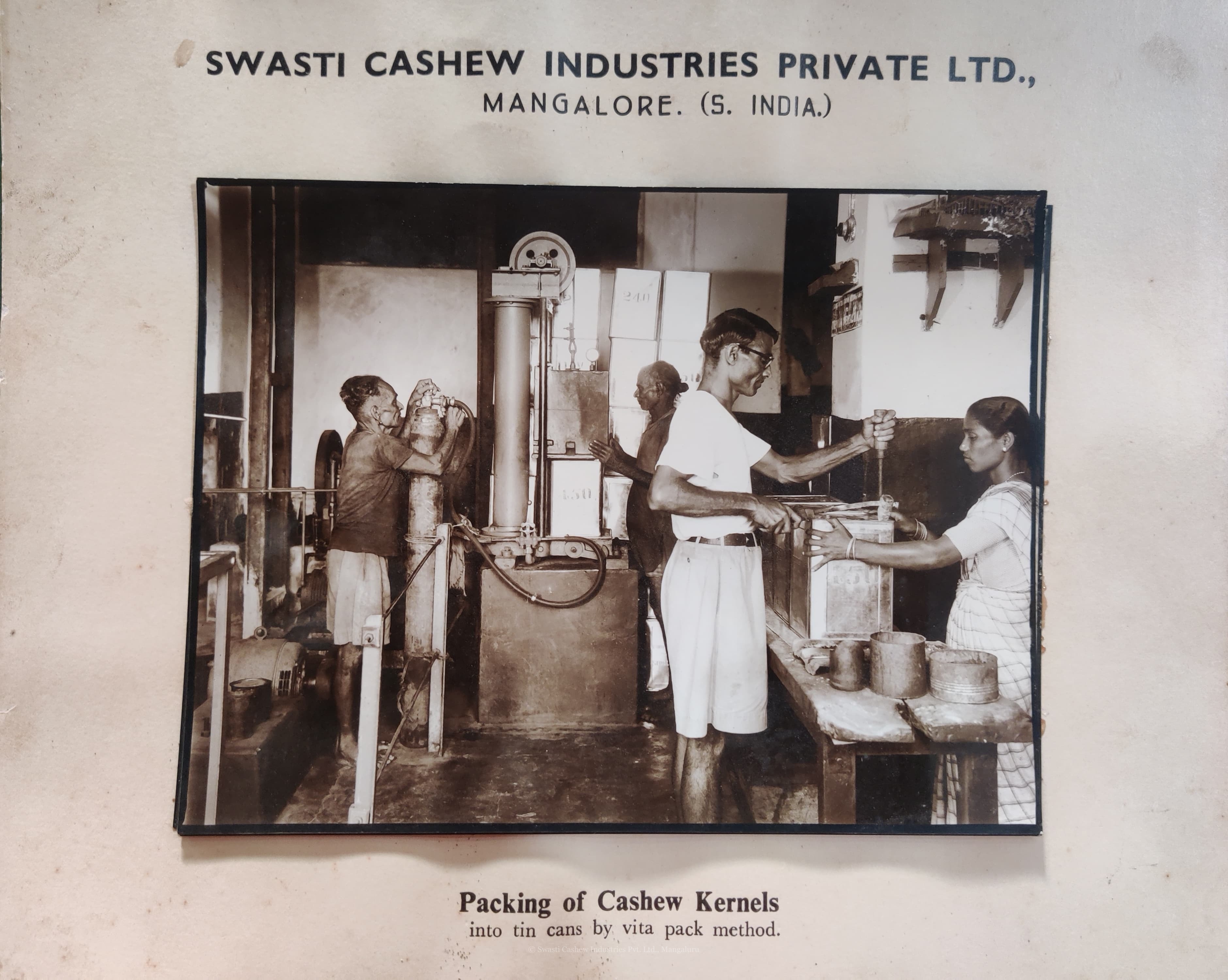
Packing process at Swasti Cashew Industries.
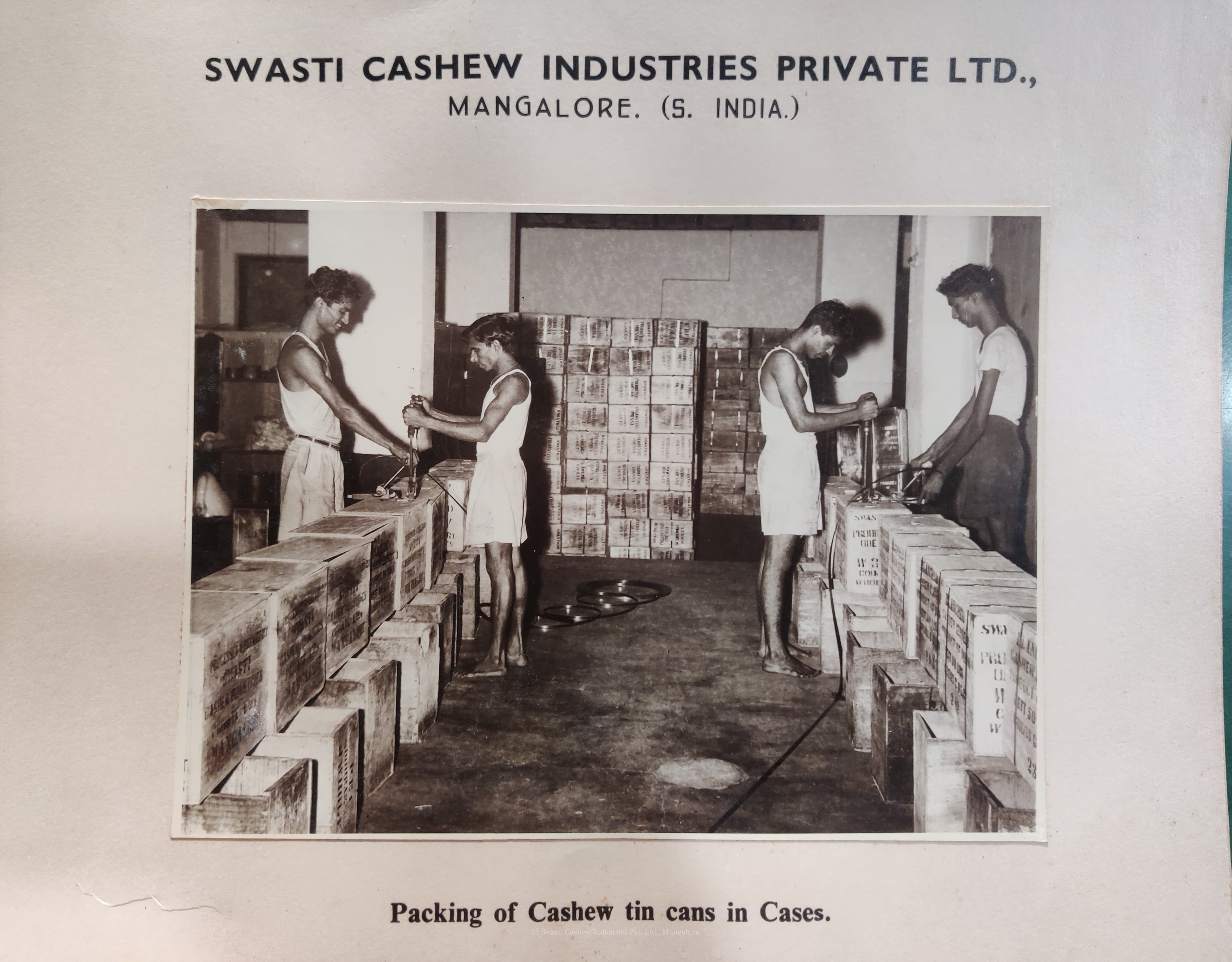
Packing in tin cans at Swasti Cashew Industries.
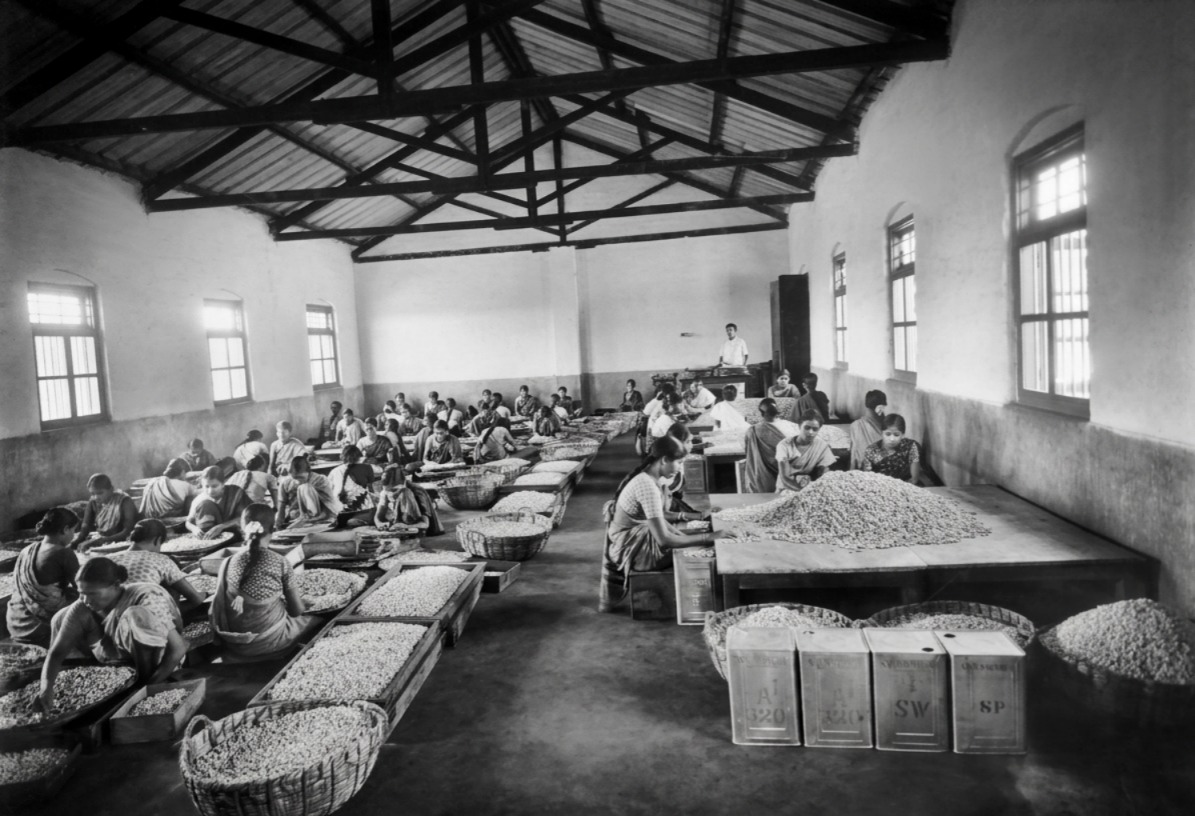
Quality Cashew Selection Process.
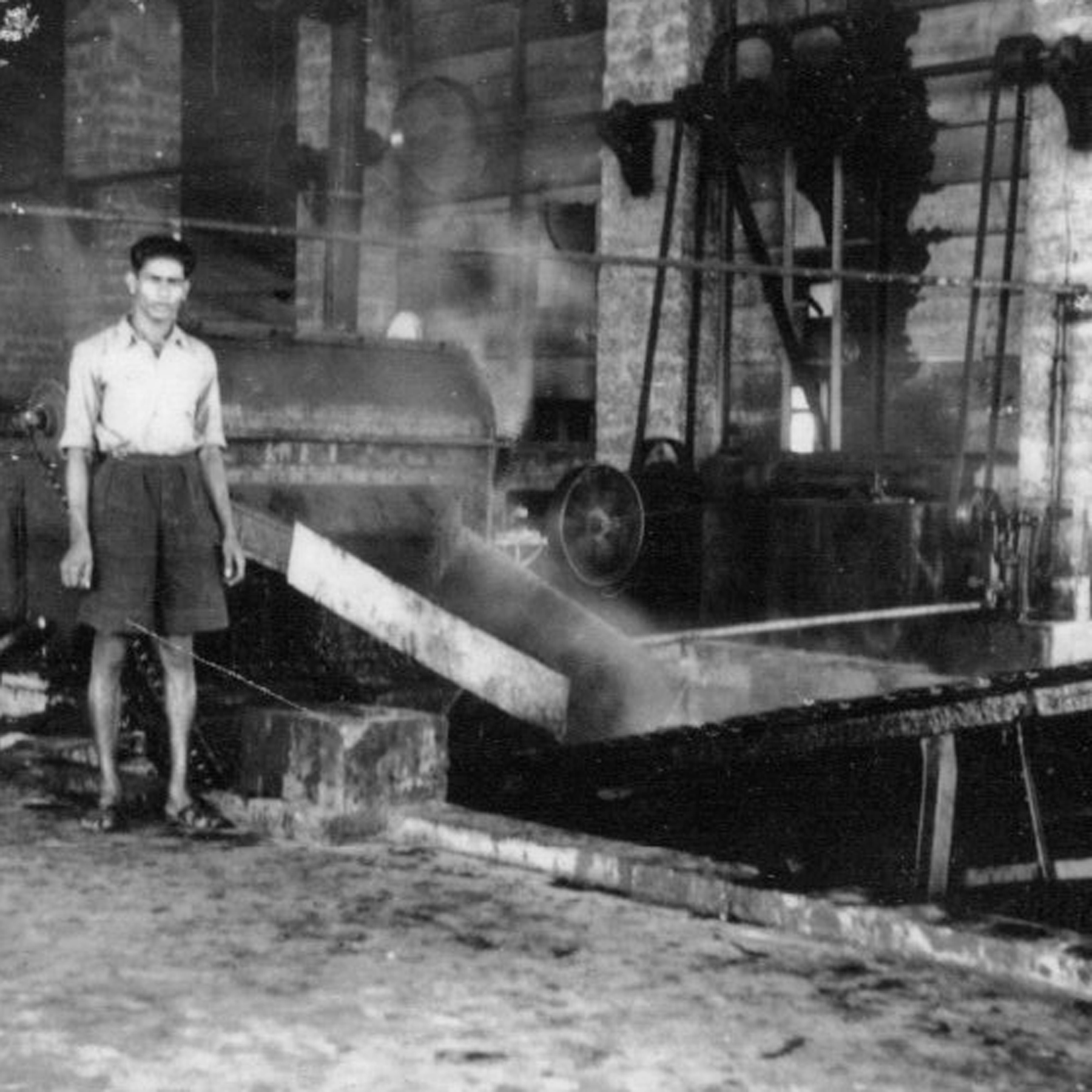
Operating an Industrial Machine.
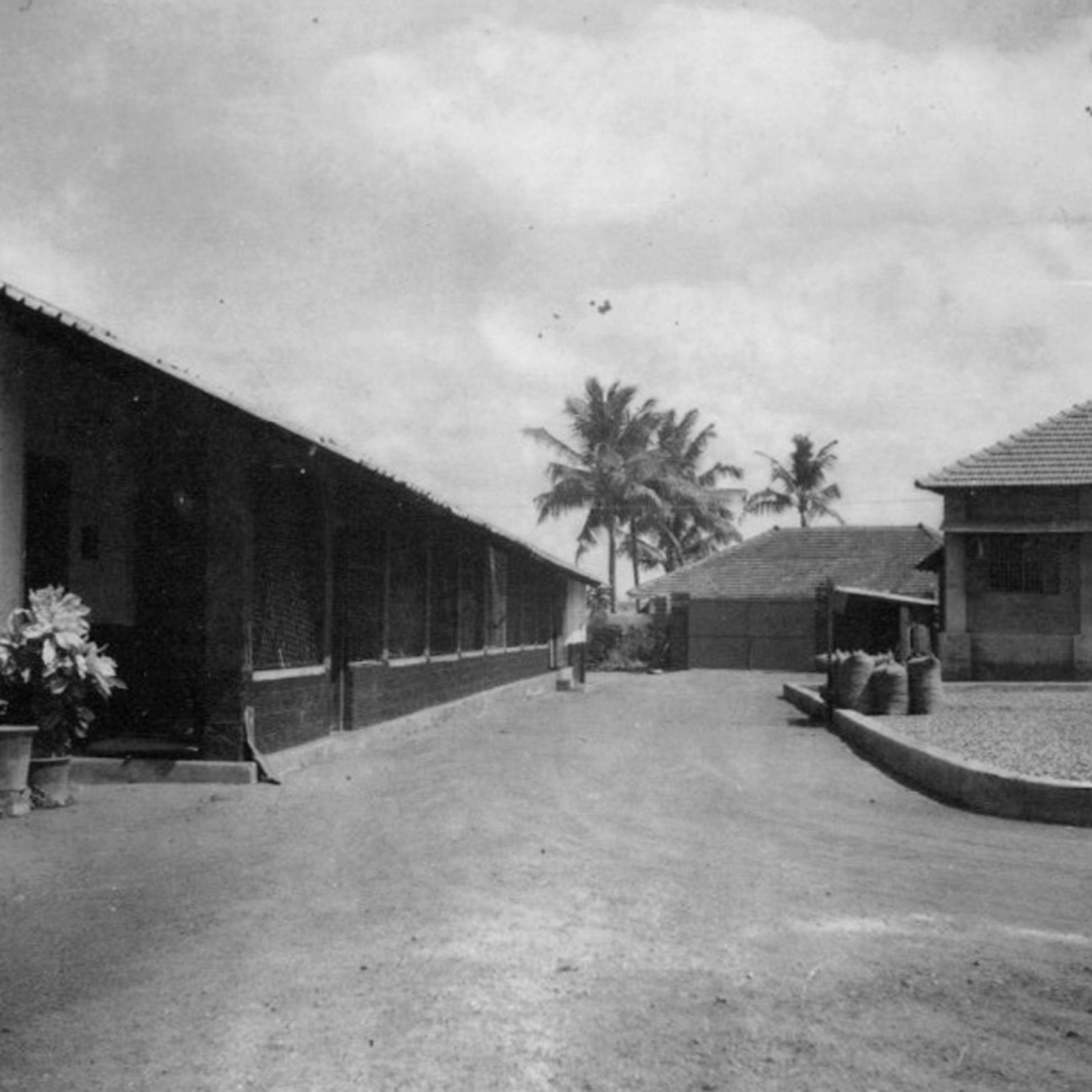
Factory Premises with Storage and Work Areas
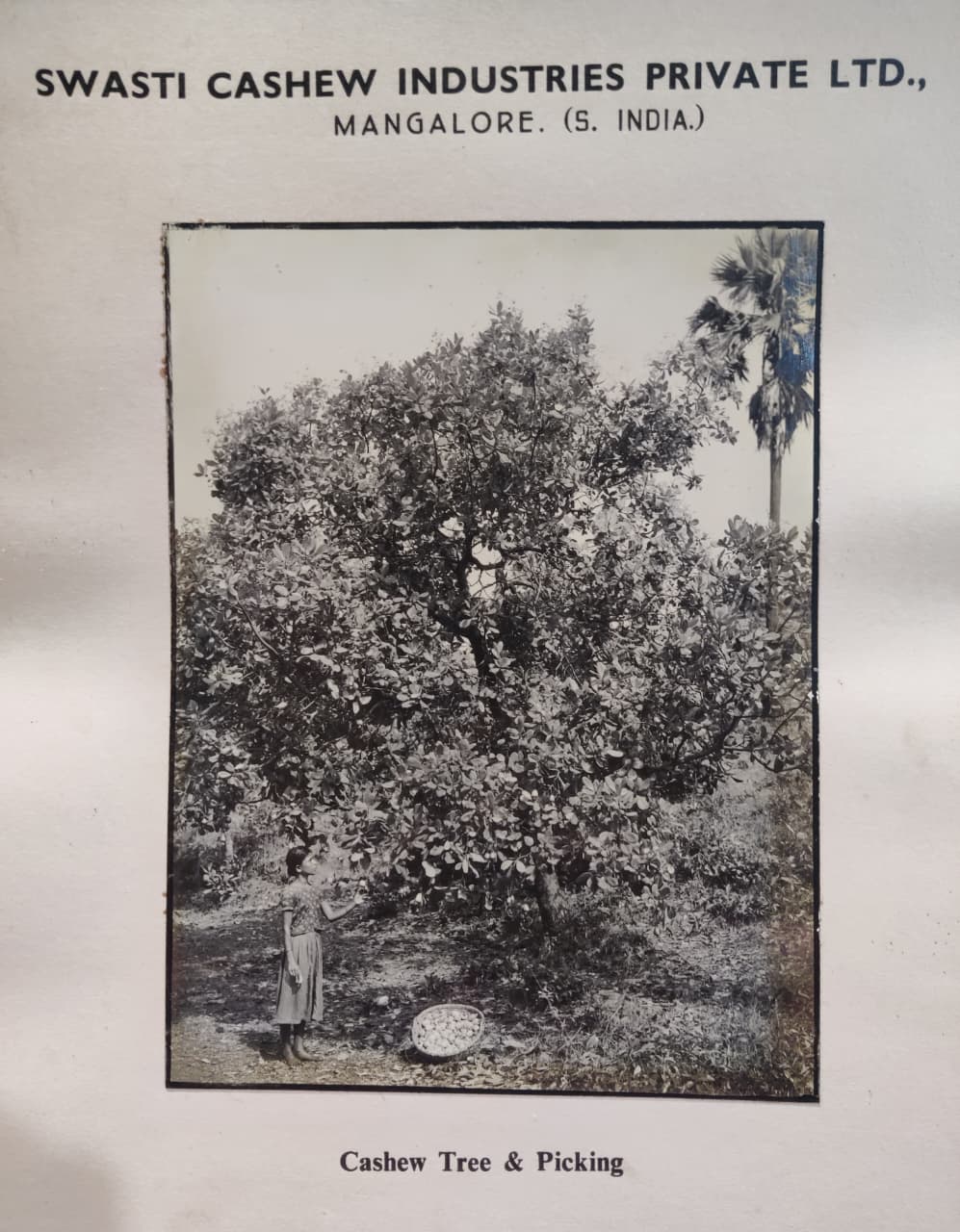
Cashew Tree & Picking
Gallery III
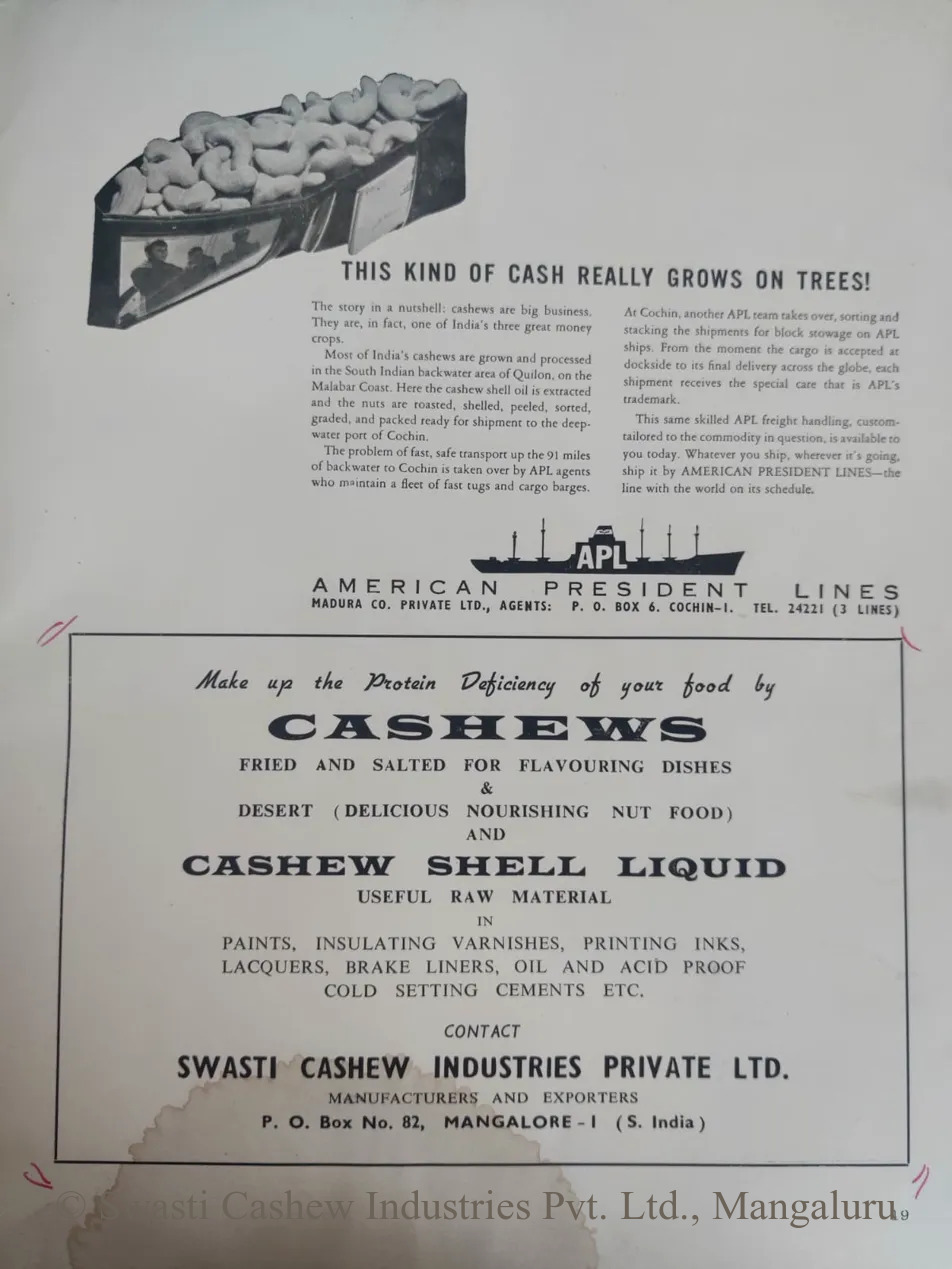
Swasti Cashew Industries trade advertisement, c.1958–60. 'Cashew Shell Liquid — Useful Raw Material in Paints, Insulating Varnishes, Printing Inks, Lacquers, Brake Liners, Oil and Acid Proof Cold Setting Cements.' P.O. Box No. 82, Mangalore — the same box number the company carries today.